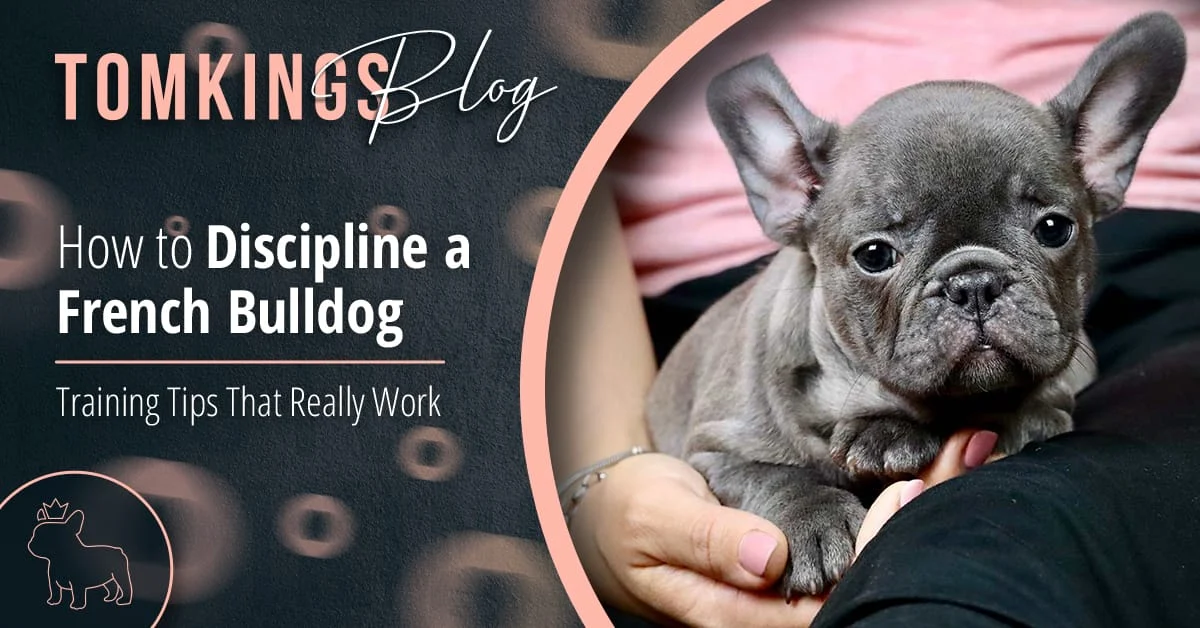
If you’ve lived with a French Bulldog, you know they’re full of charm, and just as much stubbornness. They’ll make you laugh one minute and test your patience the next by ignoring commands or chewing something they shouldn’t. That’s why clear boundaries and consistent discipline are essential.

Discipline doesn’t mean being harsh. It means being firm, fair and consistent. While they respond well to positive attention, unwanted behavior should still be addressed. A calm, firm voice, redirection, and timely corrections, done respectfully, can guide them without harming your bond. The key is balance: reward good behavior, correct the bad, and be consistent. Structure helps Frenchies feel secure and thrive.
It all starts with the basics. Many issues, like indoor accidents, can be avoided with proper potty training for dog. But discipline goes beyond that. It’s about reinforcing rules that are expected, like not jumping on furniture or stealing food. These aren’t tricks, they’re part of everyday life. Consistent correction helps your Frenchie understand boundaries and builds trust.
In this article, we’ll share 5 training tips that really work for Frenchies, and also some common mistakes that you should avoid. Let’s dive in!
Tip 1. Understanding your Frenchie’s needs
One of the biggest mistakes owners make is assuming their dog is misbehaving “on purpose.” More often, a Frenchie acts out because they’re bored, under-exercised, or just looking for your attention.

Think about it: if your pup hasn’t had a walk all day, is it really surprising they’re bouncing off the walls or shredding toys at 10 p.m.? A tired Frenchie is usually a well-behaved one.
- Exercise: Short walks twice a day are enough to keep them balanced. They don’t need to run marathons, but they do need consistent movement.
- Mental stimulation: Try food puzzles, snuffle mats, or teaching a new trick. A few minutes of “brain work” can wear them out more than a long walk.
- Routine: Dogs feel secure when life is predictable. Meals, potty breaks, and bedtime at regular times make it easier for your Frenchie to behave.
Meeting these needs is the foundation of discipline, and without it, no training method will truly stick.
Tip 2. Building the right relationship
Frenchies are affectionate but can be stubborn. So, they need a calm, steady leader to guide them. Not a drill sergeant, but a confident guide who creates a structured, respectful home. A good leader sets clear rules, starts and ends shared activities, and helps everyone understand what’s expected, creating a safe and predictable environment for the whole family, including your dog.
For example, if your Frenchie jumps on you for attention, it’s important to correct this behavior firmly every time. Ignoring it can confuse your dog and lead to jumping on guests as well. A single, calm but firm correction usually stops the behavior. It’s essential that everyone in the family enforces this rule consistently. Basic boundaries like this are part of everyday life and don’t usually require praise.

Consistency is everything. If you allow them on the couch one day but scold them the next, they won’t understand the rules. Every family member should follow the same approach. Dogs thrive on clarity, and once they understand the “house rules,” they’re much calmer and more secure.
Tip 3. Enforcing rules without harshness
Discipline doesn’t mean punishment. It’s about teaching your Frenchie what to do instead of only telling them what not to do.
If your dog starts chewing a shoe, it’s important to give a firm correction so they understand it’s not allowed. Then calmly take the shoe away and offer a chew toy instead. Praise them when they chew the toy. Over time, they’ll learn which items are theirs to play with and which are off-limits.
Time-outs also work well with Frenchies. If they get too rowdy during play, calmly remove them from the situation for a minute or two. It sends a clear signal without creating fear.
The key is calm authority. No raised voice, no frustration – just steady leadership. Your Frenchie will respond far better to consistency than to anger.

Tip 4. Ignoring can work wonders
If your Frenchie does something really bad, the most effective way to correct them is by ignoring your dog entirely. That means no eye contact, no talking, no touching, from both you and the entire family. This time-out can last for 1-2 hours, but in cases of serious behaviors like aggression, it may need to continue for several days.
Since dogs are highly social animals, being part of the family or the ‘pack’ is crucial to them. This kind of exclusion is one of the most powerful ways to show them that their behavior is unacceptable.
Tip 5. Positive reinforcement
Positive reinforcement is an essential part of training and can be divided into two categories:
- Reward-based training for learning tasks such as sit, down, stay or learning tricks.
- Positive feedback for expected everyday behaviors, for example recall, leash manners, or calm and friendly behavior around children or other dogs.
Knowing the right ways to use positive reinforcement with this breed can help a lot. Frenchies are foodies, and that works in your favor. A small treat, a cheerful “good boy!” or even a cuddle can be powerful motivators.
When teaching tasks, always keep training sessions short – 5 to 10 minutes is plenty. Work on simple commands like “sit” or “stay,” and end on a positive note. Over time, your Frenchie will connect good behavior with good things happening.
Patience is key here. Frenchies are not always the fastest learners, but they’re eager to please once they understand what you want.

Common mistakes to avoid
Even with the best intentions, many owners accidentally reinforce bad habits. Keep an eye out for these common pitfalls:
- Not being firm with corrections. Teaching a clear “no” command and setting boundaries, like sending your dog away with a cue or using exclusion when needed, is essential. Every family member must correct unwanted behavior every time to help your Frenchie understand the rules.
- Inconsistency. Letting them break the rules “just this once” confuses them.
- Physical punishment. Hitting or harsh corrections don’t work and only damage your bond. Instead, focus on calm, consistent corrections and lots of praise when they get it right.
Final Thoughts
Disciplining a Frenchie isn’t about punishment, it’s about clear guidance, patience, and creating an environment where good behavior becomes natural. Your dog needs to understand not only what is rewarded but also what is unacceptable.
By setting clear rules, consistently correcting unwanted behavior, and rewarding the right choices, you’ll build a happy, well-mannered companion who trusts you completely. Your Frenchie will not only listen better, they’ll also feel more secure, relaxed, and even more fun to live with.