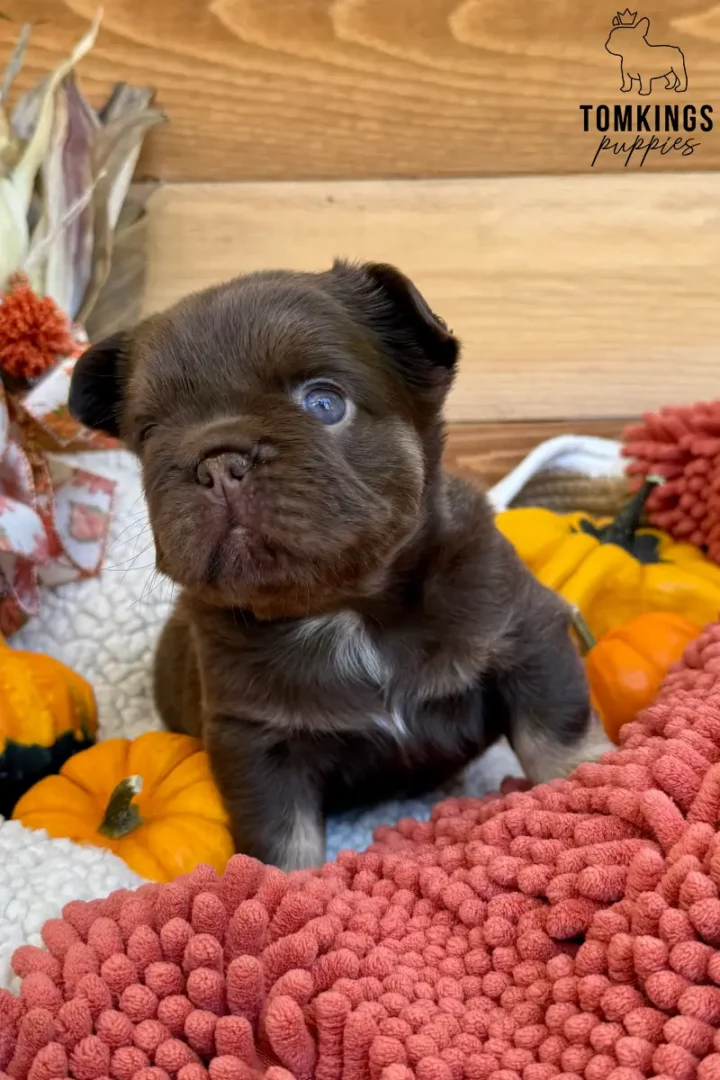
Choosing dog food for French Bulldogs can feel surprisingly stressful for something that should be simple. You walk down the aisle, and there are dozens of bags all promising the best dog food on the shelf, each one claiming to give your little one healthier skin, a happier tummy, and a shinier coat. So which one actually belongs in your baby’s bowl?
To help you cut through the noise, we asked Vali, the person we lovingly call our Frenchie whisperer.
“I always tell worried families the same thing,” Vali says. “Don’t start with the bag, start with your Frenchie. Once you know what your Frenchie needs, the right food gets so much easier to spot.”
Here’s what she wants every Frenchie family to know.
Key Points
- French Bulldogs have a short muzzle and a sensitive little tummy, so the right food matters more for your baby than it might for other breeds.
- The best dog food for your French Bulldog starts with a real, named, high quality protein and skips the vague fillers.
- The right food can support your French Bulldog’s weight, joints, coat, skin, and digestion all at once.
- Breed specific diets can be a helpful starting point, but no single bag suits every Frenchie.
- Persistent itchy skin, an unsettled tummy, or any sudden change always deserve a licensed veterinarian’s input.
Meet Vali, Our Frenchie Whisperer
So we sat down with Vali, our health expert and the person everyone turns to first, whenever a Frenchie question comes up. We call her our Frenchie whisperer, and honestly, the nickname fits. Vali believes that when you truly live alongside a French Bulldog, you come to know its every breath, every mood, every small habit. She’s been doing exactly that for years, and her knowledge runs so deep that the moment anyone she knows has a worry about their furry family member, she’s the first call they make.
We asked her how she fell so hard for this particular breed.
“It actually started with my daughter! For years, I bred Staffordshire Bull Terriers, and I thought I already knew what it meant to truly love a breed. Then my daughter said she wanted a smaller dog, so we decided on a French Bulldog. And that was it, there was nothing I could do. It was love at first sight. The second a Frenchie looks up at you with those big, expressive eyes, you’re gone. I fell completely, instantly in love.”
Why the Right Dog Food for French Bulldogs Matters So Much
Feeding a French Bulldog isn’t quite like feeding any other dog breed. The same features that make these adorable miniature bulldogs so magnificent also make them a bit particular at mealtime. That famously short muzzle means your baby can gulp down air while eating, and their digestive system tends to be more sensitive than most. Put those together and you get a breed that’s prone to soft stools, an unsettled tummy, and the not so adorable gas that every Frenchie family knows far too well.
That’s exactly why the food in your Frenchie’s bowl deserves real thought. According to Vali, the right diet touches almost everything:
“People think food is just about filling the bowl, but it’s so much more. The right food helps your Frenchie hold a healthy weight, which takes pressure off those little joints and makes breathing easier. It supports the skin, calms a lot of the allergy itching, and brings out that gorgeous shine in the coat. It keeps their tummy settled so it doesn’t hurt, and it cuts down on the gas, which, let’s be honest, is just part of life with a Frenchie… When the food is right, you can see it all over them.”
What to Look for in the Best Dog Food for Your French Bulldog
When families ask Vali what actually makes the best dog food for a French Bulldog, she keeps it simple:
“Turn the bag over and read the very first ingredient. I want to see real, named meat right at the top, chicken, turkey, lamb, salmon, something you can actually picture. If the label is vague there, I put the bag back down. Your Frenchie’s body is built on what goes in first.”
That named, high quality protein is the foundation, and a clear, precise protein content helps your baby build and keep the lean muscle mass that keeps them sturdy and active. From there, a few more things are worth looking for on the label:
- A named protein first. Real meat, listed by name, tells you about the quality and the precise protein content going into your baby.
- Healthy fats and fatty acids. Sources like salmon oil or chicken fat give your little one the fatty acids that support healthy skin and a soft, shiny coat.
- High quality carbohydrate sources. Slow-releasing carbs such as brown rice and sweet potatoes give steady energy without the spikes and crashes.
- Gentle extras. Some recipes add ingredients like green tea extract as a natural antioxidant, which can be a lovely bonus.
You don’t need a food that promises everything at once. You need a great food that’s clean, balanced, and easy for your French Bulldog to handle. Whether you choose a quality dry food or a fresh, home-cooked approach, those same principles carry over.
Which Ingredients Should You Welcome, and Which Should You Watch?
Reading a label gets so much easier once you know what the words really mean. Here’s how Vali sorts the good from the filler:
“I don’t like to judge any single ingredient on principle. What matters most to me is how your little one actually responds to the food over the course of a week or two. A clearly named protein, a good-quality fat like chicken fat, a wholesome carbohydrate, and even a gentle source of fiber can all have their place in a well-balanced diet. At the end of the day, the label on the bag matters much less than the happy, healthy Frenchie standing in front of you, excited for breakfast.”
So, generally worth welcoming: named proteins, named fats like chicken fat, whole carbohydrate sources such as brown rice and sweet potatoes, and gentle fibers. Dried plain beet pulp, for example, often gets a bad reputation, but in small amounts it’s simply a fiber that can support digestion and firmer stools.
Worth watching: vague meat meals. A label that lists chicken by product meal or pork meal isn’t automatically bad, but those terms tell you far less than a clearly named cut of meat does. Many Frenchie families also like to compare options on a third-party resource such as Dog Food Advisor before they commit, since a well-rated food gives you a helpful second opinion. The grain free question comes up a lot too, and there’s no single right answer. Grain free suits some little ones beautifully, while others do perfectly well with wholesome grains.
Are Breed-Specific Diets Worth It for Your French Bulldog?
You’ve probably seen them: an exclusive breed specific diet made just for French Bulldogs, sometimes with a customized curved shaped kibble designed to suit that short muzzle and those flat faces. The idea is appealing. The kibble shape is meant to be easier for your Frenchie to pick up and chew, and the recipe is sold as tailor made nutrition created around the breed, with exclusive nutrients to reinforce skin, coat, and digestion.

Vali’s take is warm but honest:
“A breed specific diet can be a lovely shortcut, and I’ve got nothing against them. The curved kibble really can help a baby with a flat little muzzle. But it’s still a starting point, not a promise. I’ve known Frenchies who blossomed on it, and a few who quietly did better on something simpler. So try it if you like, then watch how their body reacts.”
The thoughtful kibble shape and breed-aware recipe genuinely help many Frenchies. The only thing to keep in mind is that no single formula fits every one, and no honest label should claim it does.
How Does Food Affect Your Frenchie’s Skin and Comfort?
If your French Bulldog is dealing with itchy skin, a dull coat, or constant paw licking, the bowl is one of the first places worth looking. These little ones are known for sensitive skin, and the fatty acids in their food play a real role in keeping that skin calm and the coat soft.
This is something Vali watches closely:
“So much of what shows up on the skin actually starts in the bowl. When a Frenchie’s coat loses its shine or those little paws get itchy, food is one of the first gentle places I look. A diet with good fats, salmon oil, chicken fat, that kind of thing, often helps the skin settle. But I always remind families it’s never the only place to look.”
She’s right to be cautious there. Skin troubles can have many causes beyond food, including environmental allergies and other health conditions, so diet is one piece of the picture rather than a magic fix.
Practical Tips for Frenchie Families
We asked Vali for the everyday habits that make the biggest difference, and she didn’t hesitate:
“Honestly, most tummy troubles I see come from the little everyday things, changing food too quickly, eating too fast, portions that are a bit too generous, or giving up on a new food before the body has time to adjust. With Frenchies, I always say: go slowly, keep it simple, and watch the dog in front of you. A few patient, thoughtful changes can make a world of difference for a sensitive little tummy.”
Here’s how that looks in practice:
- Switch foods slowly. Move to a new food over seven to ten days, mixing a little more in each day. A rushed change is the quickest way to upset that sensitive tummy.
- Try a slow feeder. For a baby with a short muzzle who tends to inhale dinner, a slow bowl can cut down on gulped air and that familiar gas.
- Keep portions honest. Frenchies put on weight easily, and extra pounds press on their breathing and joints. Measure meals instead of guessing.
- Watch how their body reacts. Give any new dog food two to three weeks, then judge it by your baby’s stools, energy, skin, and appetite.
- Always keep fresh water nearby. It supports digestion and overall comfort, especially alongside dry food.
When Should You Talk to a Veterinarian?
Vali’s advice comes from years of hands-on experience, and she’s always the first to point families toward proper care when it’s needed:
“I truly believe you can achieve so much with the right diet and thoughtful everyday care. Frenchies are sensitive, and food can affect so many things, their tummy, skin, energy, comfort, even their mood. But health problems should never be brushed aside. If the itching doesn’t stop, tummy troubles keep returning, your puppy suddenly refuses food, or their breathing seems different, that needs attention. Watch them closely, trust your instincts, and involve your vet whenever something feels off.”
So please reach out to a licensed veterinarian if your French Bulldog has persistent or worsening itchy skin, ongoing diarrhea or vomiting, a sudden loss of appetite, noticeable weight changes, repeated ear or eye irritation, or any breathing difficulty. These can point to food allergies, intolerances, or other health issues that deserve proper care. When something feels sudden, severe, or simply not right for your baby, a quick chat with your vet is always the safer path.
Finding the Right Food, and the Right Frenchie
Feeding your French Bulldog well isn’t about chasing the most expensive bag on the shelf. As Vali puts it:

“Pay attention, choose clean ingredients, and let your puppy tell you the rest. That’s the whole secret, really. Love and a bit of patience go further than any fancy label.“
That’s exactly the spirit we try to bring to every Frenchie. And if you’re dreaming of welcoming a healthy, well-loved little one into your family, we’d love to help. Take a look at our available French Bulldog puppies, browse our care and nutrition guides, or simply reach out with your questions. We’re here for the whole journey, not just the first hello.