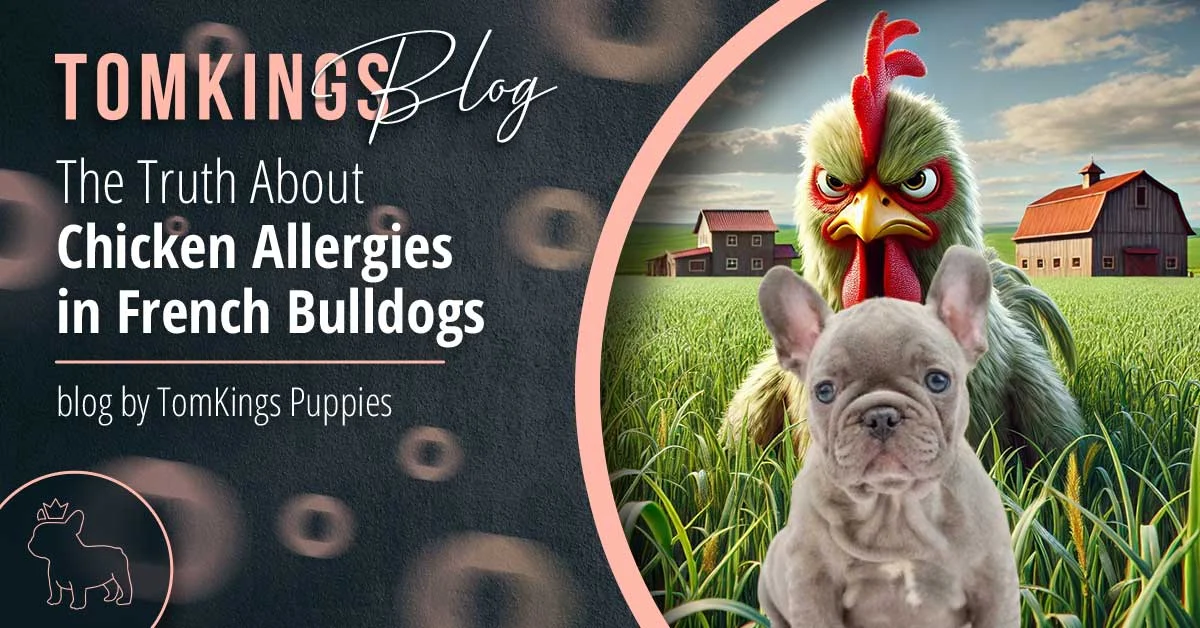
Chicken is one of the most common ingredients in dog food due to its high protein and nutrient content. It appears in countless dry foods, wet foods, and treats, which is why many French Bulldogs eat it daily. Yet more and more owners notice itching, paw licking, or digestive issues and start to suspect chicken allergies.
This article explains what is really behind chicken allergies in French Bulldogs and why so many Frenchies seem sensitive to chicken based diets. Our experience shows that in most cases the problem is not the chicken itself but the quality of the ingredients and how commercial dog foods are processed, which is why we always look at the whole diet before blaming one ingredient straight away.
Let’s take a closer look at what’s actually happening in a Frenchie’s body and how you can figure out what your dog is reacting to.
Key Takeaways
- French Bulldogs can develop a true allergy to chicken protein, although similar symptoms may also be caused by other ingredients or environmental allergies.
- Food intolerances and true food allergies are different, and understanding the signs helps you choose the right diet for your Frenchie.
- An elimination diet is the most reliable way to identify whether chicken is the real trigger.
- A balanced, complete diet and proper veterinary guidance are especially important when dealing with recurring allergy symptoms.
Food Intolerance vs Food Allergy in Dogs: What’s the Difference?
When it comes to your French Bulldog’s health, it’s important to understand the difference between a food intolerance and a food allergy. While these terms are often confused, they mean different things, and we see Frenchie parents mix the two up quite often.

What is a food intolerance in French Bulldogs?
Food intolerance occurs when your dog’s body is unable to properly digest a certain ingredient. This often happens because they lack the enzymes needed to break it down. It can lead to diarrhea, loose stools or an upset stomach, and may even cause dull, lifeless fur.
It’s important not to take food intolerance lightly, as it can be a warning sign that something is off in your dog’s diet. If left unaddressed, intolerance may develop into more serious sensitivities over time. When the same symptoms keep appearing after certain foods, we always think it’s worth looking for a pattern rather than simply changing foods at random.
What is a true food allergy in French Bulldogs?
Food allergy is an immune system response. When your dog eats something they are allergic to, their body mistakenly identifies it as harmful and triggers a reaction. This leads to symptoms like itching, recurring ear infections, paw licking and skin issues such as hair loss or rashes.
In French Bulldogs, these allergic reactions are often mistaken for intolerances. If your Frenchie regularly shows these symptoms, their diet may be causing an immune response, and it’s time to investigate potential allergens. For more info read our article about the most common French Bulldog allergies.
One thing we always keep in mind is that itchy paws or ears don’t automatically mean chicken allergy. Frenchies can react to environmental allergens too, so recurring symptoms are worth discussing with your vet.
The Real Cause Behind Chicken Allergies in French Bulldogs
Why does low-quality chicken cause allergy-like symptoms in Frenchies?
It might surprise many Frenchie owners to learn that most French Bulldogs aren’t actually allergic to chicken itself. Instead, the problem usually comes from the quality of the chicken used in commercial dog food and the way it’s processed.
In large-scale farming practices, chickens are often raised in poor conditions and fed low-quality grains like GMO corn or other cheap fillers. They are usually kept in overcrowded environments, which leads to stress and illness. This affects the quality of the meat, and the chicken that ends up in many commercial dog foods is often far from a healthy source of protein. From our experience, looking at the whole ingredient list and keeping the diet consistent makes it much easier to understand what your Frenchie is actually reacting to.

Poor-quality meat becomes even less nutritious after heavy processing. Many commercial dog foods contain preservatives, additives and fillers that your Frenchie’s body has to work hard to eliminate. This constant overload can irritate the immune system.
In many cases, these chemicals trigger the reaction, not the chicken itself. This is why so many owners believe their Frenchie has a “chicken allergy” when the real issue is the quality of the ingredients, and why we always encourage families to look closely at what is actually in the food.
What Happens Inside Your Frenchie’s Body During an Allergy
When feeding your Frenchie low-quality chicken-based food, combined with fillers like grains, legumes, by-products and chemical additives, their immune system can become overwhelmed. The constant exposure to these ingredients forces their body to work overtime. It tries to flush out the toxins every single day, which puts a lot of stress on the digestive system.
A healthy gut can handle occasional irritation, but daily exposure creates ongoing inflammation. Over time, the gut lining may weaken. This can lead to a “leaky” gut, allowing toxins, bacteria and undigested particles to pass into the bloodstream. The immune system reacts aggressively to fight them, which results in classic allergy symptoms like itching, skin irritation and digestive issues.
So, what many Frenchie parents see as a chicken allergy is often the body’s reaction to low-quality ingredients and harmful additives, not the chicken itself. Understanding this process makes it much easier to address your Frenchie’s symptoms and choose safer, cleaner food options.
How Can You Identify and Manage Chicken Allergies in Your French Bulldog?
To help your Frenchie overcome food allergies, there are two essential steps: identifying the root cause through an elimination diet and strengthening their immune system so they can handle allergens better.

How does an elimination diet help confirm a chicken allergy?
The most reliable way to determine if your Frenchie is truly allergic to chicken is through an elimination diet. This involves removing all chicken-based products from their meals and treats for a period of 6-8 weeks. During this period, you feed them a novel protein they haven’t eaten before, such as lamb, fish or duck.
By eliminating chicken, you allow your dog’s system to reset and heal from the allergic reactions. Over the course of the diet, you should start to see improvements in their symptoms, such as reduced itching, better digestion, and healthier skin.
Consistency is key during this process. Even a small amount of hidden chicken in treats or additives can interrupt the reset period. Avoiding these helps you diagnose the allergy more accurately and gives your Frenchie the best chance to recover.
How can you strengthen your Frenchie’s immune system during an allergy?
Supporting your Frenchie’s immune system is crucial, especially during an allergic reaction. When overworked, the immune system can weaken, making your dog more vulnerable to future allergies and infections. A nutrient-rich, high-quality diet is the foundation of good immunity.
Choose dog foods free from artificial additives, preservatives, and fillers. Read our article to find the best food for French Bulldogs and look for options packed with vitamins, minerals, and antioxidants. Adding immune-boosting supplements, such as fish oil rich in Omega-3 fatty acids, can also promote long-term health designed for dogs.
A 2–3 month course of immune supplements can make a noticeable difference in your dog’s recovery. A stronger immune system means fewer allergic reactions in the future, and it helps your Frenchie maintain better overall health.
Conclusion
In short, many French Bulldogs that seem to have a chicken allergy are often reacting to poor-quality chicken or harmful additives in commercial dog food. By understanding the difference between food intolerance and allergies, and identifying the root causes through an elimination diet, you can help your Frenchie recover and live a healthier life.
Strengthening their immune system through a balanced, nutrient-rich diet and supplements can also help prevent future allergic reactions. Regular vet check-ups are key to catching any signs of allergies early and maintaining your dog’s health.

If you’d like to learn more about caring for French Bulldogs, including tips on nutrition and more, join our TomKings Frenchie Family Facebook group, where fellow Frenchie parents share insights and experiences.
FAQ
What is the healthiest food for a French Bulldog?
The healthiest food is a complete, balanced diet made from quality ingredients that your individual Frenchie tolerates well.
Can French Bulldogs really be allergic to chicken?
Yes, but in most cases they react not to the chicken itself, but to low quality meat and additives found in commercial dog foods.
How do I know if my Frenchie has a food allergy?
Common signs include itching, paw licking, ear infections and digestive issues that return regularly.
What is the best way to confirm a chicken allergy?
An elimination diet for 6–8 weeks is the most reliable method to see whether chicken is the true trigger.
Can switching to higher quality chicken solve the problem?
For many Frenchies, yes. Cleaner, minimally processed proteins often eliminate symptoms.
How long does it take for symptoms to improve after changing food?
Most Frenchies show improvement within a few weeks, but full recovery can take 6–8 weeks.
Is chicken toxic for French Bulldogs?
No. Chicken itself is not toxic to French Bulldogs, although some Frenchies may be sensitive or allergic to it.
Can my Frenchie eat cooked chicken?
Yes. Plain, fully cooked chicken without seasoning or cooked bones can be given to Frenchies that tolerate chicken well.
Is beef or chicken better for Frenchies?
Neither is better for every Frenchie. The best choice is the protein your Frenchie digests well and doesn’t react to.
Which meat is best for Frenchies?
There is no single best meat for every Frenchie. Chicken, beef, lamb, turkey, duck and fish can all be good options depending on the individual dog.
What meat should Frenchies avoid?
Frenchies should avoid any meat they are allergic or sensitive to, as well as heavily seasoned or spoiled meat.
What’s the best food to give a French Bulldog?
A high-quality, balanced food that suits your Frenchie’s age, activity level and individual sensitivities is best.
The article is based on the expert knowledge of the TomKings Puppies team who have been breeding French Bulldogs for 15 years on their farm. All the pictures in the post belong to them and their customers, and show puppies from their breed. Check their available French Bulldog puppies, or if you have any questions or comments let us know below the article.