Picking between a Pug and a French Bulldog isn’t as simple as it looks. Both are small, cute, and built for close family life. They’re the kind of canine companion who wants to be where you are, whether that’s the couch, the kitchen, or in bed beside you.
Here’s our honest take: both can be amazing, but the “best” one depends on your routine and what you want at home. Bringing home a puppy is a bit like bringing home a baby. You don’t just pick the cutest one. You pick the one that fits your lifestyle.
Key Takeaways Before You Decide
- Both pugs and Frenchies are true companion dogs who bond deeply and want to be close. Both pugs and Frenchies can develop separation anxiety if left alone too long, so they need plenty of human interaction.
- Pugs tend to be calmer and lower energy. French bulldogs tend to be a little more playful. Both pugs and French bulldogs count as moderate energy dogs.
- Both are flat faced breeds, so breathing and heat management matter every day.
- Both can be stubborn. Consistency, patience, and positive reinforcement are non-negotiable in the early months.
- Pugs are cheaper upfront, but long-term vet costs and ongoing costs should be part of your decision.
Where Pugs and French Bulldogs Come From
They look like cousins, but their origins are very different.
The Pug is an ancient breed, over 2,000 years old, with roots in China. Pugs were famously beloved by Chinese emperors, often living right inside royal palaces. That long lapdog history with Chinese emperors is one big reason so many Pugs are still relaxed and people-focused today.
The French Bulldog breed, despite the name, has roots in England. It developed in the 1800s from smaller Bulldogs popular with working families. When those dogs travelled with English lace workers to France, they became a city favourite, and France is where those signature bat ears and short tail became the breed’s calling card.
Both pugs and French bulldogs were shaped to live right next to humans. That’s why people sometimes call them “velcro dogs.”
What About a “Frug”?
A Frug is a Pug and French Bulldog mix. Looks and personality vary a lot, and you really don’t know what you’ll get. With a purebred companion from a responsible breeder, predicting size, temperament, and traits is much easier.
Size, Ears, Coat, and Colour: The Visible Differences
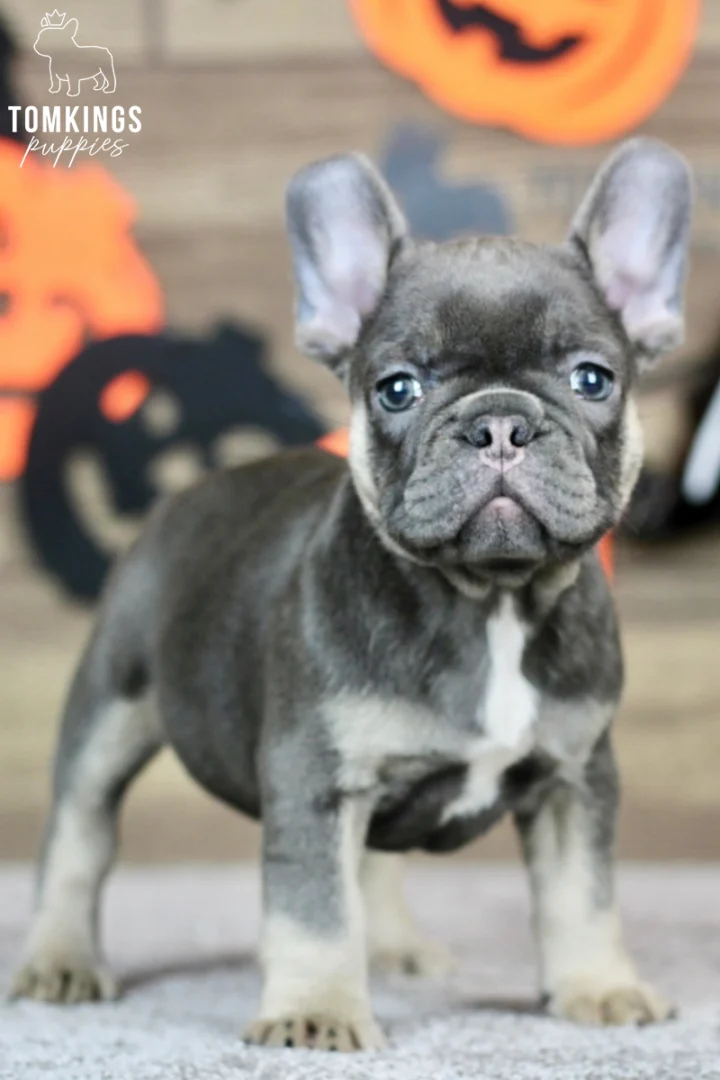
The most obvious difference is the ears. French bulldogs have upright bat ears that stand tall. Pugs have soft, folded ears. Tails differ too: pugs usually have a tight curl, Frenchies have a short tail that can be straight or slightly screwed.
Build differs too. Pugs are rounder and softer. French bulldogs are more muscular and sturdy. Most Pugs weigh 14 to 18 lbs. French bulldogs land between 17 and 28 lbs, sometimes more depending on structure.
Coat is where families feel the difference fast. Pugs have a double coat, so shedding can be heavy, especially seasonally. A weekly brushing helps, and you’ll need to manage loose hair on your couch and clothes more than you might expect. French bulldogs have short coats (single-layered) and shed much less, so a quick weekly brushing keeps the coat healthy with much less loose hair to deal with.
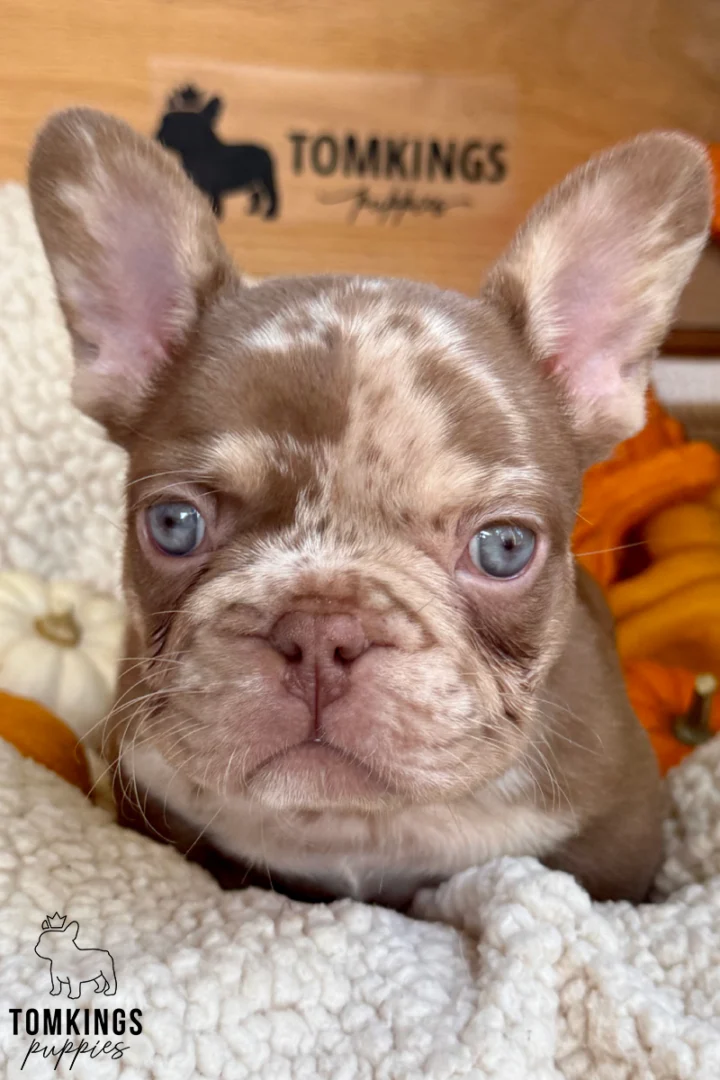
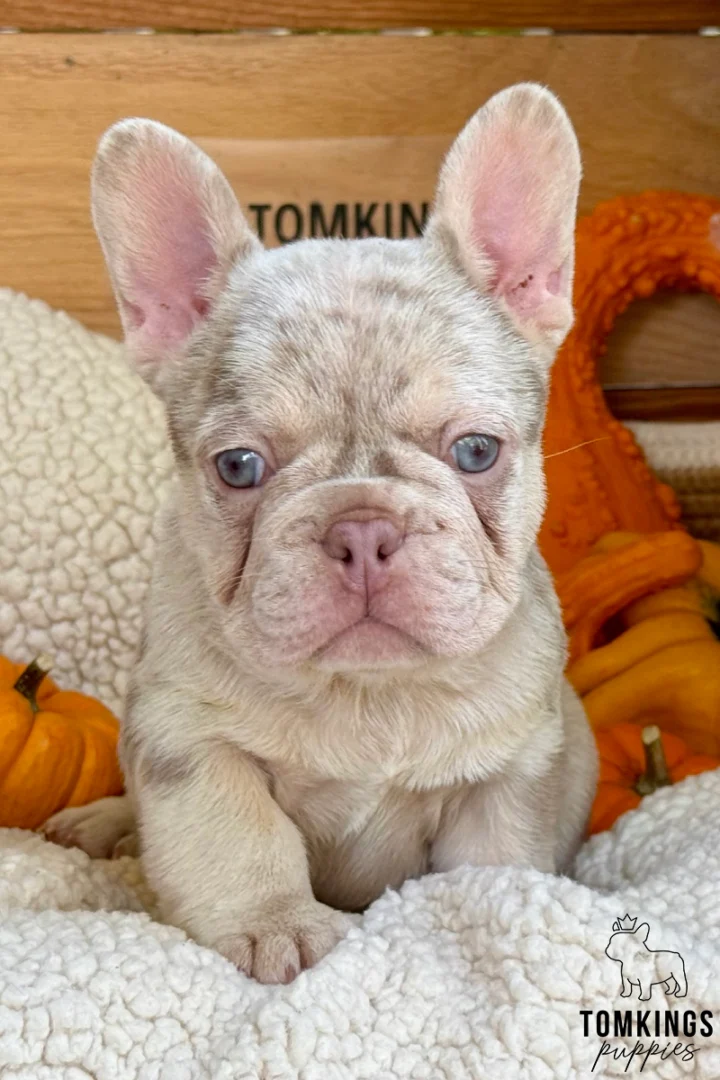
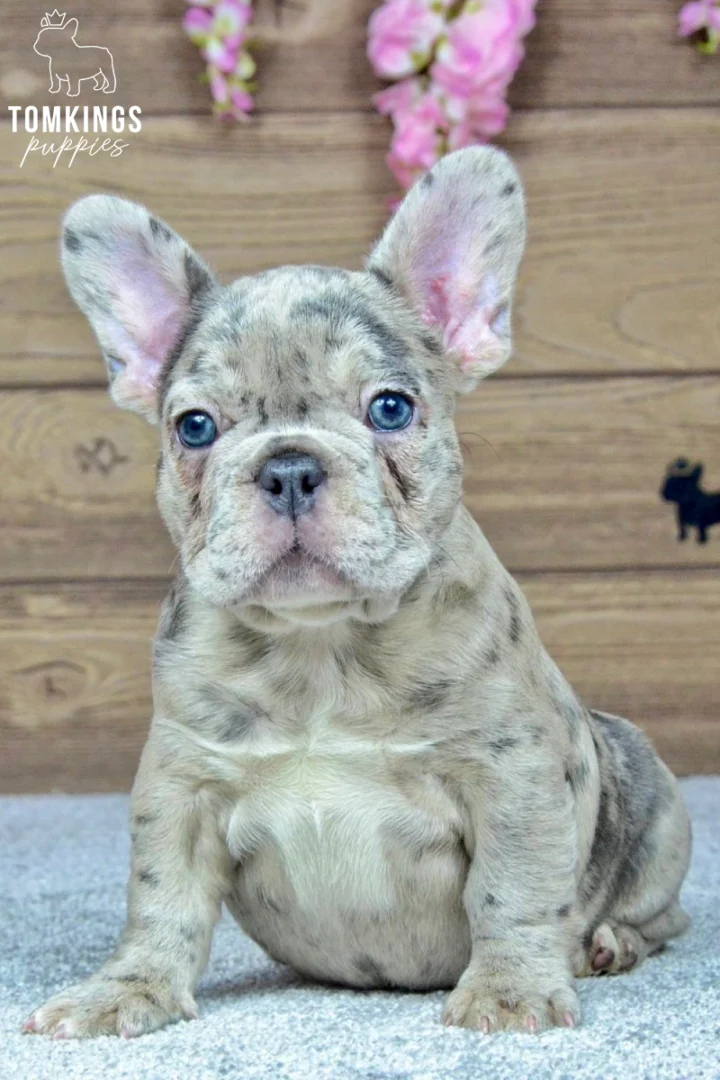
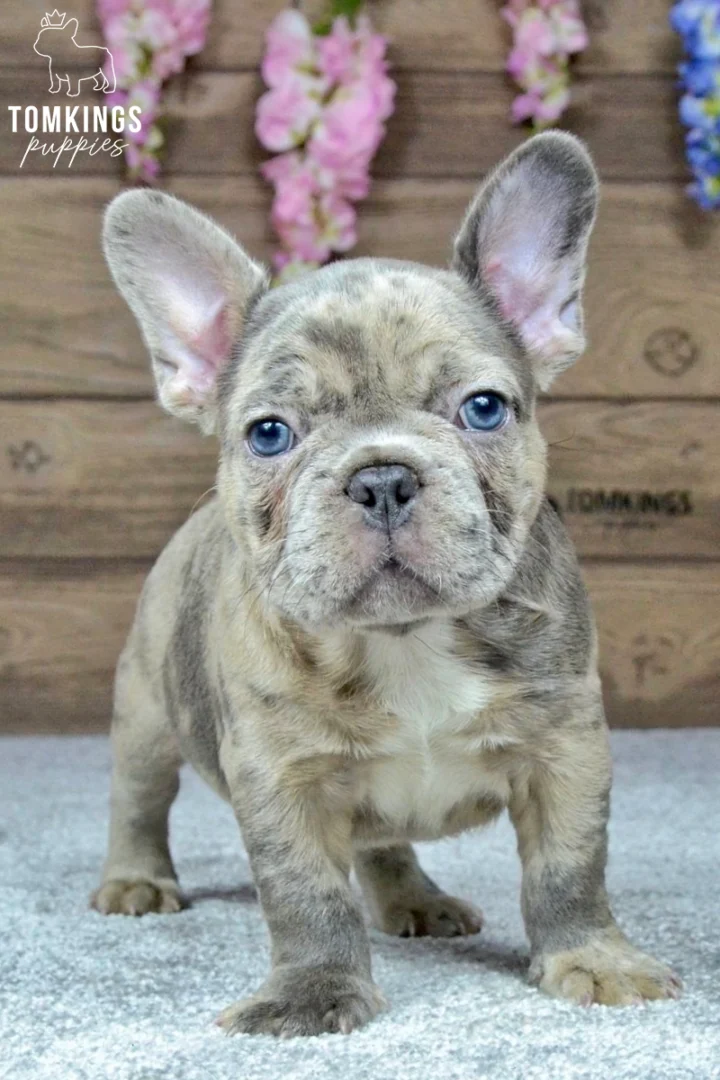
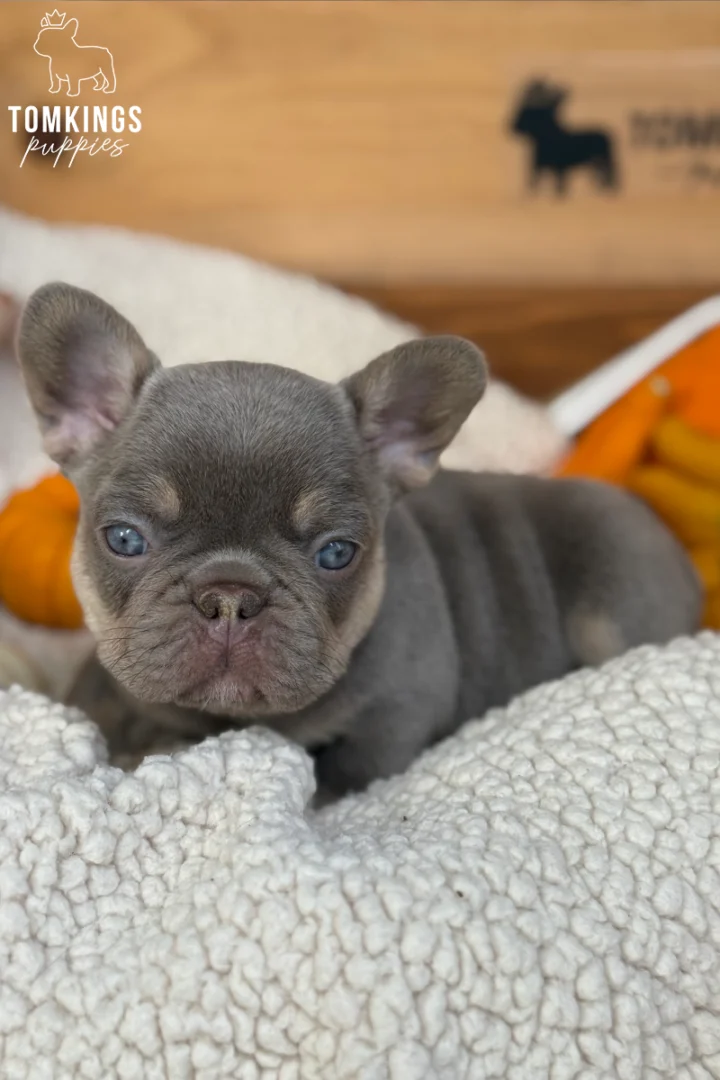
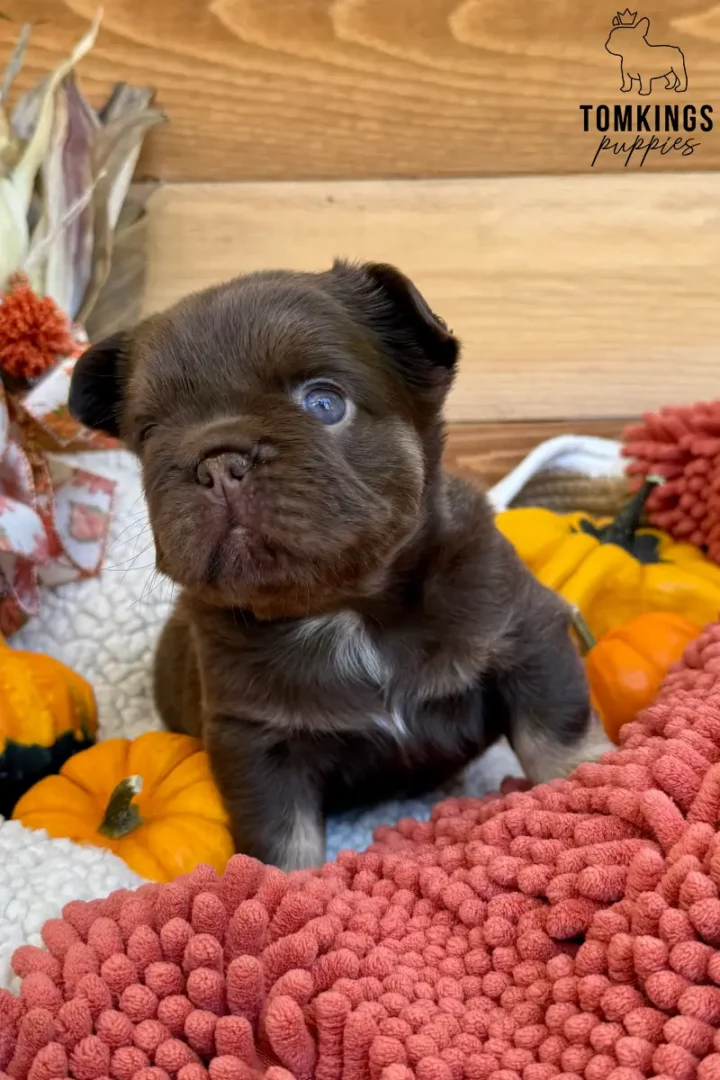
Colour is another big contrast. Purebred pugs come in just two: fawn and black. French bulldogs offer way more variety with classic shades like black, red, beige, blue, and lilac, plus standout patterns like merle (dappled spots) and tan-marked (lighter markings on paws, chest, cheeks, and eyebrows). Most have short coats that are smooth and easy to care for, but there’s also the rare Fluffy Frenchie with a longer coat. For the full range, see our guide to French Bulldog colors.

Nancy, puppy at TomKings Frenchies
Personality in Real Family Life
When people start the french bulldog debate against the Pug, personality is usually the real deciding factor. Both pugs and French bulldogs are companion dogs to their core. Both love being close to their people. Both can easily become “velcro dogs.”
Pugs tend to be more laid-back. They enjoy short walks, steady routines, and lots of couch time. They can be playful, but they’re usually happy just being near you.
French bulldogs tend to have more spark. Both french bulldogs and their puppies are playful, curious, and love interactive games. They still adore cuddle time, but they like being involved in whatever’s happening. For families with kids or slightly more active households, that extra energy often feels like a great match.
So the personality question comes down to this: do you want a calmer shadow who’s happiest resting beside you, or a playful little soul who brings more daily energy into your home?
Training Realities
Training matters here, especially for first-time pet parents. The good news: both breeds are smart and capable. The honest truth: both can also be a bit stubborn.
Pugs are seriously food-motivated and respond well to treats. They love to please, but lose focus quickly if training feels repetitive. Short, positive sessions work best.
French bulldogs are just as food-motivated and often pick up commands fast, but they’ve got a strong personality. If they sense inconsistency, French bulldogs will test boundaries. Clear rules and calm repetition make a real difference.
With both, positive reinforcement works far better than correction. Yelling or harsh discipline usually shuts them down. Positive reinforcement plus early socialization in those first few months matters a lot. Early socialization with new people, sounds, and gentle experiences builds confidence that lasts a lifetime. The biggest training factor isn’t the breed. It’s how consistent you are in those early months.
Health and Lifespan
Health is one of the most important parts of this decision. Both pugs and French bulldogs are brachycephalic, meaning they have shortened muzzles and flat faces. That look comes with specific care needs, but none of it is a deal-breaker if you go in informed.
What Flat Faced Breeds Have in Common
Flat faced breeds share some common health considerations and health concerns. Each one has a simple, manageable answer:
- Breathing issues in warm or humid conditions: Avoid midday walks during hot weather and keep your home cool. Heat management is genuinely the biggest day-to-day thing you’ll do for flat faced dogs in hot weather.
- Heat intolerance and breathing challenges during intense exercise: Keep activity gentle. Heat intolerance shows up faster than expected, so both breeds prefer short walks over intense exercise. Heat tolerance is naturally lower in flat faced dogs.
- Eye sensitivity: A quick daily wipe keeps exposed eyes clear.
- Skin fold dermatitis if folds aren’t kept clean: A weekly wipe prevents almost all skin infections and skin fold dermatitis. The same routine protects against most other skin infections.
Regular vet visits, healthy weight control, and avoiding extreme heat are the everyday habits that matter. These health concerns sound serious on paper, but they’re all manageable with simple daily routines.
Health Differences Between the Two
There are a few breed-specific concerns worth knowing.
Pugs tend to be more prone to obesity. Their hearty appetite plus lower activity level can lead to weight gain if portions aren’t managed, and extra weight adds pressure on joints and breathing. Pugs are also known for eye-related health problems, and in serious cases eye disease can threaten vision if not caught early. There’s also a rare condition called pug dog encephalitis, a neurological issue specific to the breed. Reputable breeders screen for pug dog encephalitis, so it belongs on every Pug parent’s checklist.
French bulldogs tend to be more prone to joint and spine sensitivities thanks to their compact, muscular build. Hip dysplasia can also show up in poorly bred lines, which is why screening for hip dysplasia matters. Careful breeding reduces these health issues significantly, so choosing a reputable breeder matters a lot for the French bulldog breed.
For both, pet insurance is worth considering early, since it makes routine and unexpected vet visits much easier on your wallet.
Lifespan
Pugs generally live around 12 to 14 years. French bulldogs typically live 10 to 12 years, often longer with great care. Lifespan numbers matter, but quality of life matters even more. With responsible breeding, good nutrition, regular vet care, and weight control, both breeds can be loving companions for many wonderful years.
What About Price?
Future pet parents often focus heavily on price, but it’s only the starting point. The real cost also includes food, supplies, grooming, and future vet care.
A Pug is usually cheaper upfront. In the US, Pugs typically start around $3,000 USD from reputable breeders. French bulldogs typically range from $3,500 to $12,000 USD depending on colour, pedigree, and the breeder’s reputation.
Here’s what doesn’t get talked about enough. Even a well-bred Pug can come with serious vet bills later. Pugs are more prone to eye conditions, and those health issues can be more severe than most pet parents expect. In the worst cases, eye disease can lead to vision loss, which is why some Pug parents spend several times the adoption fee on medical care. Long-term ongoing costs are part of the picture.
Price reflects more than you’d think. It reflects the care that goes into raising the puppy, and the support you’ll have after you bring them home.
Which One Fits Your Lifestyle?
Both breeds are amazing, but neither is “perfect” for everyone.
Choose a Pug if you want a calmer, lower-energy buddy who loves life at a slower pace. Pugs love short walks, steady routines, and endless cuddle time. Just stay on top of portions (because Pugs are serious foodies).
A French Bulldog might fit better if you want a companion that’s still cuddly but a little more playful with more character. Frenchies love interactive games, short bursts of play, and being included in everything.
Both pugs and French bulldogs are great for apartment living. Their small size, modest exercise needs, and love of cuddle time make apartment living an excellent fit.
Whichever way you land, think in terms of routine. Can you handle a velcro dog who wants to be close most of the day? Can you commit to basic training, weight control, and regular vet checkups? Those are the things that shape the next 10 to 14 years.