Has your French Bulldog ever suddenly started scratching more than usual, chewing near the tail, or waking up restless at night? It is hard not to worry when something seems off, especially when you love your furry family member so much and simply want the best for them.
The good news is that in many cases, there is no reason to panic. Sometimes, the problem can come down to tiny little parasites like fleas. And even with the most careful Frenchie parents, a flea can occasionally find its way onto their Frenchie. Frenchies can have very sensitive skin, so even a single bite may be enough to make them noticeably uncomfortable. Luckily, fleas are usually quite manageable once you know what to do. But just like with most things, it is also easy to focus on only one part of the problem and miss the rest.
After many years of caring for our own puppies, we have developed a simple routine that we turn to whenever we notice those familiar signs. So if you have noticed your Frenchie scratching more than usual or showing other signs of discomfort, we have outlined the steps we recommend to address the problem properly and help your Frenchie feel comfortable again as quickly as possible.
Key Takeaways
- Use a flea comb when you notice itching, chewing, irritated skin, or black specks.
- To eliminate fleas, treat fleas on your Frenchie and address eggs, larvae and pupae in the environment.
- Choose oral medications, topical treatments, flea collars, or other treatments with your veterinarian.
- Flea shampoos can kill fleas on the coat, but shampoos alone cannot stop the whole cycle.
- Call your vet for pale gums, weakness, open sores, severe hair loss, or a reaction to treatment.
Flea Life Cycle Essentials
The fleas you see on your French Bulldog are only one part of the problem. Eggs and larvae may already be hiding in their bed, on the sofa, in small cracks around the home, or in plush toys and other soft surfaces. If these areas are not treated as well, the problem can return very easily, even after the fleas on your Frenchie seem to be gone.
This is also why a simple bath is often not enough. To deal with fleas effectively, it helps to understand how their life cycle works and where each stage may be hiding. Once you know that, it becomes much easier to treat the problem properly and reduce the chance of it coming back.
The flea life cycle has four stages: egg, larva, pupa and finally the adult flea, which is usually the one you actually notice on your Frenchie. Adult fleas feed directly on your French Bulldog, but the rest of the life cycle is often happening quietly around the home. After feeding, female fleas lay eggs that can easily fall into your Frenchie’s bed, your sofa, carpets, soft toys and even tiny cracks in the floor. From there, the larvae stay hidden in protected spots and feed on organic debris, including dried blood. They then form cocoons and develop into pupae, where they can remain protected until warmth, movement, or vibration signals that it is time for a new adult flea to emerge.
So even if the fleas you can see are gone, the problem may not be over yet. Eggs, larvae, or pupae may still be developing around the home! That is why we treat both our Frenchies and their surroundings consistently for several weeks.
In our experience, spotting a few new fleas at the beginning usually means the life cycle is still running its course, not that the treatment has failed.
Adult Flea
Adult fleas bite and move quickly through the coat, so we often notice flea dirt before we see an actual flea. For us, those tiny dark specks are already a reason to look more closely and act early. Since adult fleas keep laying eggs, quick flea control helps prevent eggs from spreading through the home.
Flea Eggs, Larvae and Pupae
Flea eggs, larvae and pupae are all different stages of the flea life cycle, and most of them are much harder to spot than adult fleas.
Flea eggs are tiny, white and oval, almost like very small grains of salt. They can easily fall off your Frenchie and collect in beds, blankets, carpets, sofas and other places where your Frenchie spends time.
Flea larvae look like tiny, pale, worm-like creatures. They usually hide deep in carpets, cracks, bedding and other dark areas, which makes them easy to miss.
Flea pupae are even harder to notice. At this stage, the flea is developing inside a small protective cocoon that can become covered with dust and debris, helping it blend into its surroundings.
This is why treating your Frenchie and the environment at the same time is so important. Even when you can no longer see adult fleas, eggs, larvae or pupae may still be developing around the home, allowing the problem to start all over again.
Why French Bulldogs Are Especially Vulnerable
Frenchies can pick up fleas just like any other dog breed. They may come into contact with them through other dogs or pets, but fleas can also be picked up from the environment itself. It can happen during the most ordinary moments. Your Frenchie may be sniffing around the yard, walking through the grass, spending time at a dog park or shared outdoor area, lying on a shared blanket or simply being somewhere another animal has been before. That doesn’t mean you need to start worrying about every walk or keep your Frenchie away from other dogs and outdoor adventures.
Especially when they are young, it may feel like these little problems pop up more easily while you are still figuring out the right prevention and care routine. But once you know what to watch for, how to prevent fleas and what to do when they appear, it usually becomes something you can manage without too much stress.
The bigger concern is not that Frenchies attract more fleas, but how sensitive their skin can be. Even a single bite may cause significant itching or irritation, especially in Frenchies that are prone to flea allergy dermatitis.
A few fleas are not a serious danger on their own, but a flea infestation should never be ignored, especially in young puppies. If fleas remain for a longer period of time, repeated bites can cause intense itching, skin irritation and even secondary skin infections from constant scratching and chewing.
With puppies, we are especially careful. A heavy or prolonged flea infestation means many fleas are feeding on a very small body, and over time the blood loss can lead to anemia, which can become dangerous for a young Frenchie. This is why it is important to notice the signs early and deal with the problem before a small infestation has the chance to turn into something more serious.
Although it is less common, fleas can carry tapeworm larvae. If your Frenchie accidentally swallows an infected flea while licking or grooming, it can lead to a tapeworm infection. That is another reason why treating fleas properly from the beginning matters so much.

Signs Your French Bulldog Has Fleas
When a family tells us their French Bulldog has fleas, these are the first signs we ask about:
- scratching, biting, or chewing
- restless sleep
- red or irritated skin
- scabs or hair loss near the tail, belly, or hind legs
- black specks in the coat
- pale gums, weakness, or unusual tiredness in severe cases
If your Frenchie suddenly starts scratching more than usual, it is easy to assume fleas are the reason, but itching alone does not automatically mean a flea infestation. Allergies, mites, yeast, bacterial infections and food sensitivities can all cause very similar symptoms.
That is why we prefer to check carefully instead of jumping to conclusions. If you do find fleas or flea dirt, then it becomes much easier to know what you are dealing with and choose the right next steps.
That’s exactly why our Frenchie Expert, Vali, always starts with the simplest clues and works from there:
“With our Frenchies, I first look around the tail base and lower back. If I see tiny black specks and they are very itchy, that is usually a strong sign that fleas may be the cause. I already know I need to take a closer look. I would rather check early than wait until the skin is really irritated.”
Diagnosing a Flea Infestation at Home
When it comes to diagnosing fleas at home, start with a simple flea comb check. Place your Frenchie on a white towel in good light. That white background makes a big difference, because anything that falls from the coat is much easier to spot.
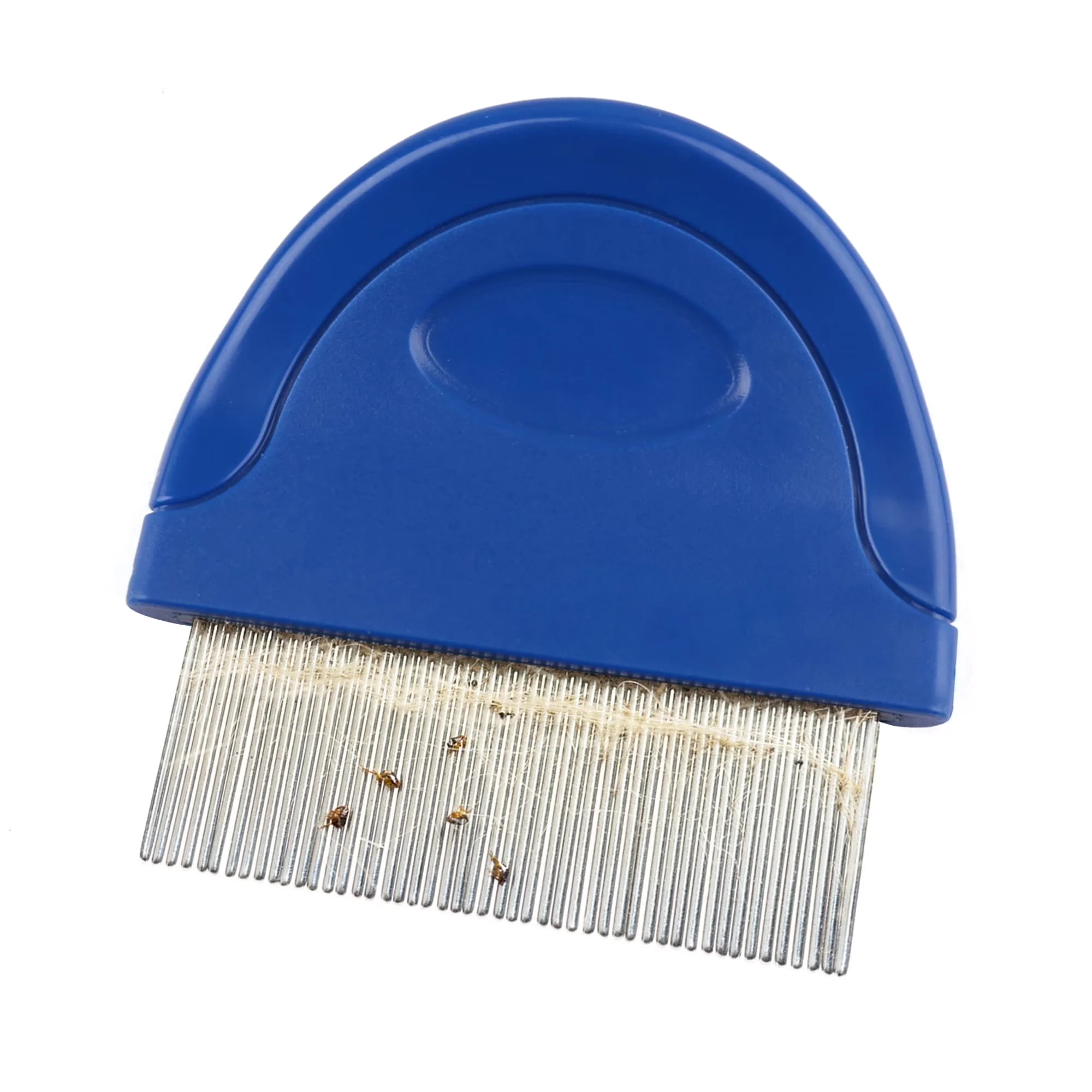
Start around the tail base and lower back, because that’s where we usually check first with our puppies. Then move through the neck, behind the ears, belly and legs. After each section, tap whatever you collect from the comb onto a white paper towel so you can take a closer look.
What you’re mainly looking for are tiny black specks. If you find any, dampen the paper towel slightly. Flea dirt contains dried blood, so those specks may leave a reddish-brown mark.
If you catch a live flea, have a bowl of soapy water ready. And here’s one thing we know for a fact: plain water is not enough. Fleas can stay on the surface and may survive, so the soap is important because it breaks the surface tension and helps pull them under. Make sure the flea is fully submerged and no longer moving before you assume it’s gone.
Once you’ve checked your Frenchie, take a quick look around the places they spend the most time too. Check their bed, blankets, your sofa, soft toys, rugs and small cracks around the home. Fleas and their earlier life stages can still be hiding there even when you don’t see anything moving on your Frenchie.
Treating Fleas on French Bulldogs
When we treat fleas, we follow the same order:
- Confirm the product plan with the veterinarian.
- Treat every household pet at the same time.
- Wash bedding and clean the environment.
- Continue flea control long enough to catch newly emerging fleas.
- Monitor your Frenchie’s skin and behavior.
It may sound like a good idea to combine flea treatments so they work faster, but unfortunately, it isn’t. We never recommend mixing products on your own. Flea collars, oral treatments, topical products, shampoos, sprays and powders can all contain different active ingredients and combining them without veterinary guidance can increase the risk of side effects.
Vali is especially careful about this:
“If one treatment does not seem to work immediately, I never start adding other products on my own. Fleas have a whole life cycle, so seeing another flea does not always mean the medicine failed. I would rather speak with our vet and continue the right plan safely.”
Medical Treatments
There is no single best option for every French Bulldog. Over the years, we’ve dealt with situations like this many times with our Frenchies. We’ve learned that the right choice depends on the individual pup. We always consider age, weight, health history, lifestyle, and local risks from fleas, ticks, heartworms, and other parasites.
Oral medications: Oral treatments are convenient, and some also protect against ticks, heartworms, or intestinal worms. Isoxazoline warnings can sound alarming, but these products are safe and effective for most Frenchies. We recommend choosing one with your vet and watching after the first dose, especially if your French Bulldog has a history of neurological issues.
Topical treatments: These are applied to the skin, usually at the back of the neck. Some people suggest a small patch test for sensitive skin, but we do not do this with flea medication. The dose is based on weight, so using less may leave your Frenchie unprotected. If sensitivity concerns us, we ask our vet for a more suitable product.
Flea collars: Flea collars can be a practical long-term option. We recommend one that suits your Frenchie’s age and weight, fits comfortably and works safely with other treatments. Remove it and contact your vet if you notice an unusual reaction. The same applies to tick collars.
At TomKings, parasite prevention starts early. We deworm our puppies every two weeks from two weeks of age, then use Advocate Spot-On at eight weeks and Bravecto at twelve weeks. We also record every treatment before travel, so each family knows exactly what has already been given.
For us, keeping that record is part of taking proper care of each puppy. We want every family to know exactly what their Frenchie has already received before they join their new family, so they can share that information with their vet right away. From there, the plan can be adjusted to the individual puppy and the area they’ll be living in.

Home Treatments and Environmental Flea Control
We can’t emphasize this enough: treating your Frenchie is only half the job. Flea eggs, larvae and pupae may still be hiding around the home. That’s why proper flea control also means cleaning the places your Frenchie uses every day.
This is what we normally do and recommend:
- Wash the dog’s bed, blankets, toys and covers in hot water.
- Vacuum rugs, carpets, furniture, baseboards and underneath furniture.
- Empty the vacuum outside.
- Use pet-safe household sprays exactly as directed.
- Treat all pets in the house at the same time.
This is how Vali handles it:
“If I find fleas on one of our Frenchies, I automatically think about where that little one has been sleeping. Their bed, blanket, the sofa, their favorite corner. I clean those places at the same time.”
The same applies outside. We check shaded spots under decks, along fences and around outdoor bedding, then clear away leaves and debris where fleas can hide. We avoid loose powders such as diatomaceous earth, as airborne dust may irritate a Frenchie’s airways. Instead, we prefer vet-approved sprays or professional treatments and always follow the return-time instructions.
Household products can help, but they are only one part of the routine. The goal is to stop the flea life cycle in all the places your Frenchie actually uses.
Flea Prevention and Flea Control Strategies
At TomKings, our puppies start parasite prevention early and we keep a clear record of every treatment they receive. Once your puppy joins your family, we recommend continuing with a vet-approved flea prevention plan. It’s much easier to stay ahead of fleas than to deal with a full infestation later.
To prevent fleas and protect Frenchies’ health, we usually suggest:
- year-round flea prevention where appropriate
- a phone reminder or calendar for each dose
- coat checks after walks, travel, boarding, or play
- regular bedding care
- veterinary advice before changing active ingredients
Vali keeps prevention very simple:
“The best routine is the one you actually remember to follow. When I give a treatment, I record it straight away and set the next reminder. With several Frenchies around, I never want to rely on memory.”
We also don’t switch between oral treatments, topical products, or flea collars just for the sake of changing things up. If the current plan is working well, there is usually no reason to complicate it. We only make changes when our vet recommends it, for example because of side effects, poor flea control, a weight change, or different local risks.
In the end, good flea prevention is mostly about consistency. The right product, given on time and used correctly, is far more useful than piling several treatments on top of each other.

Flea Shampoo, Combs and Tools
Flea shampoos can kill the fleas that are on your Frenchie during the bath, but they are not a complete long-term solution. We use them as one part of the routine, not the whole plan.
For our Frenchies, we stick to a gentle shampoo, lukewarm water, a thorough rinse and careful drying between the folds. Human shampoos can be too harsh and too many baths can dry out the skin.
We’ve learned that with Frenchies, more bathing is not always better. Once the skin gets dry, the itching can become even worse.
Vali sees this quite often:
“When a Frenchie is itchy, the first instinct can be to bathe them again and again because you want to help. But if the skin is already irritated, too much bathing can make them even more uncomfortable. I prefer a gentle bath when needed and then focus on treating the actual flea problem.”
A fine flea comb is one of our favorite simple tools. Keep a bowl of warm soapy water nearby for anything you catch, have a few treats ready and be patient. Your Frenchie may not be in the mood for a cuddle session, so take it slowly and give them breaks if they need one.
When to Call Your Veterinarian
Contact your vet if your Frenchie has pale gums, weakness, fast breathing, or unusual tiredness, as these can signal blood loss, especially in puppies. Open sores, swelling, pus, or severe hair loss also need veterinary care.
Call straight away if vomiting, shaking, poor balance, or seizures appear after treatment. Returning fleas are also worth discussing, as the product, dosage, home treatment, or internal parasites may need review.
For very young puppies, pregnant or nursing Frenchies, and those with health concerns, always check with the vet before using a flea product.
Vali’s rule here is very straightforward:
“If one of our puppies suddenly seems weak, unusually sleepy, or their gums look much paler than normal, I don’t wait to see how they are tomorrow. With a small puppy, I would rather have the vet check them once too often than once too late.”
Quick Monthly Flea Prevention Checklist
- Confirm your French Bulldog’s current weight.
- Give each preventive treatment on time.
- Check the coat and skin.
- Look at the tail base, belly, armpits and legs.
- Wash bedding and vacuum resting areas.
- Keep the product box, receipt and vet notes.
- Record any reaction or skin change.
Final Thoughts
When a Frenchie has fleas, the itching can quickly become more than a minor annoyance. The sooner you notice the signs and act, the easier it is to keep both your Frenchie and your home comfortable.
At TomKings, we keep flea control simple and consistent: spot the signs early, choose one safe treatment plan, check every pet in the home, clean the environment and stay on top of prevention.
Over the years, we’ve learned that changing products every few days usually creates more confusion than progress. A calm, consistent routine works much better. With the right plan, you can break the flea life cycle, help prevent them from coming back and most importantly, get your Frenchie comfortable again.
FAQ
Can French Bulldogs get fleas?
Yes. French Bulldogs can get fleas just like any other breed.
How do I know if my Frenchie has fleas?
Look for scratching, red skin, hair loss, or tiny black specks in the coat.
Where should I check for fleas?
Start around the tail base, lower back, neck, behind the ears, belly and legs.
What does flea dirt look like?
It looks like tiny black specks that may leave a reddish-brown mark on a damp white tissue.
How do I get rid of fleas on my French Bulldog?
Use a vet-approved treatment and clean your Frenchie’s bed, blankets, sofa and other favorite spots.
Should I treat my home too?
Yes. Flea eggs and larvae can hide around the home even when you do not see adult fleas.
Can I combine flea treatments?
No, not without veterinary guidance. Mixing products can increase the risk of side effects.
How long does it take to get rid of fleas?
Several weeks because the flea life cycle continues in the environment.
Why do I still see fleas after treatment?
New adult fleas may still emerge from hidden eggs, larvae, or pupae.
How can I prevent fleas from coming back?
Use prevention consistently, keep bedding clean, check the coat regularly and follow your vet’s advice.