

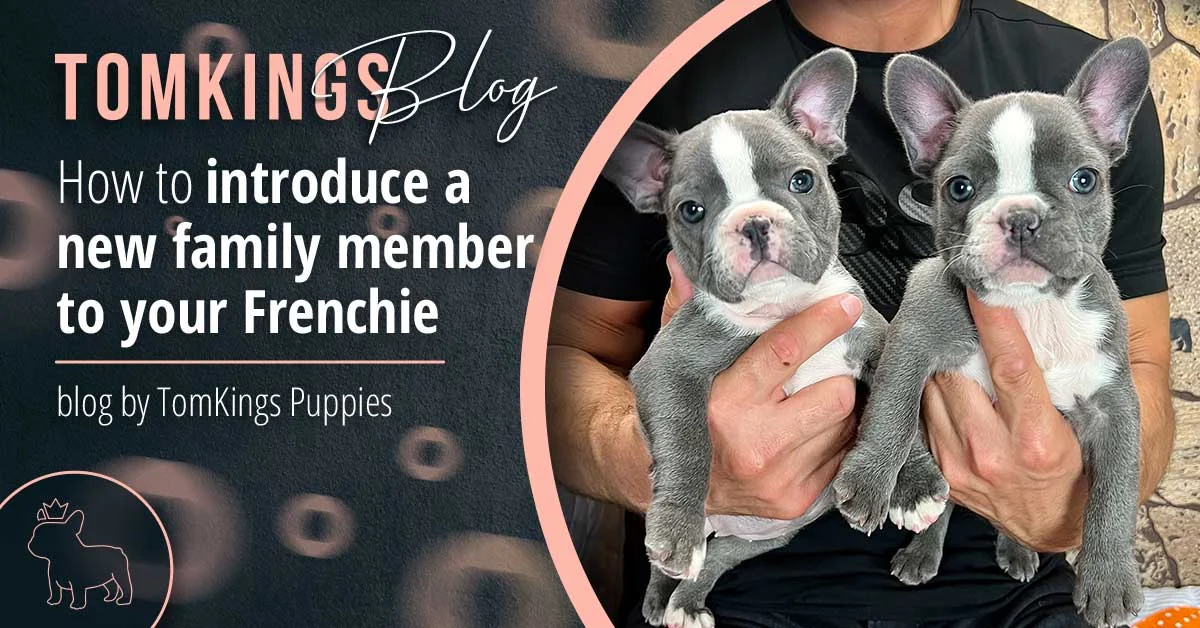
Introducing a new family member, like a second French Bulldog, baby or a cat, brings immense joy and excitement to everyone involved. However, it’s important to remember that your older puppy might perceive the newcomer as a threat, as they might fear losing your love and attention. In order to ensure a smooth transition, our experts have put together a step-by-step guide to introducing a new family member to your Frenchie.
Introducing a second puppy to your Frenchie
Many of our clients who raise a wonderful French Bulldog soon realize they want to adopt a little sibling. Having two Frenchies is definitely better than one, as they can entertain each other at all times and keep each other company when no one’s home. You need to remember though that they won’t become best friends instantly, and there are a few precautions that you’ll need to take when you bring your second Frenchie home.
Step 1: Choosing a neutral meeting place
When introducing your second Frenchie, it’s crucial to select a neutral location for their first meeting. This can be a nearby park or an area in front of your house. Avoid having them meet in your garden or inside your home. By doing so, you prevent your older puppy from feeling the need to protect their territory and potentially attacking the new pup.
Step 2: Familiarize them with each other’s smells
To kick-start their friendship, place your second pup, safely nestled in a carrying bag, close to your first Frenchie. This will pique their curiosity and allow them to get acquainted with each other’s scents. If you don’t have a carrying bag, it’s important to keep both dogs on leash during this initial meeting and observe their behavior closely. If your first puppy seems happy and at ease, you can introduce the new one.
Step 3: Monitoring their interaction
Always keep a watchful eye on your Frenchies’ budding friendship as they first interact. It’s normal for the older pup to feel a bit unsure or even a tad jealous in the beginning. By paying attention to their behavior, you can step in if any signs of irritation arise. Remember, older dogs typically don’t mean any harm to young pups, but occasionally, the new pup’s enthusiasm can unintentionally provoke the older Frenchie.
Step 4: Setting playtime rules and boundaries
One common source of conflict is when the new puppy’s playful energy becomes overwhelming for the older dog. In such cases, it’s important to gently guide the new pup to give the older one some space and respect their boundaries. And if you notice any signs of squabbles or disagreements, consistently intervene to prevent it from escalating.
It’s crucial to only leave them alone together if the older dog has accepted the new pup, so they don’t growl, allow the new pup to sniff around, and even engage in playful behavior. If you see that they become completely at ease in the new pup’s presence, you can gradually increase their time spent together.
Step 5: Continue showering your older pup with love
You should be prepared that the initial phase can be challenging, especially during the first 3-4 days. Your older Frenchie may not immediately warm up to the new addition. In some cases, they may even feel a twinge of jealousy and show their dislike, which is perfectly natural. That’s why it’s important to shower them with extra love and attention during this transition, and spend quality time with each pup individually. By doing so, you ensure they feel secure and valued within the family.
By following these tips and having tons of patience, you’ll foster a loving and harmonious bond between your two adorable Frenchies. Remember, this process takes time, but with your care and attention, they will become the best of friends in no time!
Introducing a baby to your Frenchie
French Bulldogs are not only good with kids, they are simply amazing companions for children of all ages! Naturally, introducing your Frenchie to the new addition requires care and attention. Just like we did with a second Frenchie, let’s break it down into steps to ensure a smooth and positive introduction.
Step 1: Familiarizing your Frenchie with the baby’s scent
Before your newborn arrives home, it’s a good idea to get your Frenchie accustomed to the baby’s scent. Take a piece of cloth or blanket that belongs to the baby and place it near your dog’s bed or favorite spot. Encourage your pup to sniff it and respond positively. Praise them and offer treats when they show curiosity and remain calm. This helps them associate the baby’s scent with something pleasant and creates a positive association.
Step 2: Allowing gentle interaction
Once your baby is home, it’s important to gradually introduce them to your Frenchie. Start by allowing your pup to sniff the baby from a safe distance. If your Frenchie remains calm and curious, offer praise and rewards. However, if you notice any signs of discomfort or aggression, such as growling or baring teeth, intervene immediately. Remove them from the situation and firmly reprimand them so that they understand that their behavior is not acceptable.
Step 3: Monitoring and correcting behavior
As time goes on, continue to observe your Frenchie’s behavior around the baby. If they display any negative behavior, such as attempting to bite or show excessive possessiveness, it’s important to address it promptly. When your Frenchie repeats inappropriate behavior around the baby, it may be necessary to implement a more serious punishment after the initial reprimand.
One effective method is temporarily ignoring your Frenchie, as being excluded from their pack can be a significant punishment for them. On the other hand, be sure to provide plenty of positive reinforcement and attention when your Frenchie acts friendly and calm around the baby. This way, they will gradually learn to accept and coexist with the new family member.
Remember, the safety and well-being of both your baby and your Frenchie are essential. Always supervise their interactions and create a positive and nurturing environment for everyone involved. With patience, consistent training, and lots of love, your Frenchie will adjust to the presence of the baby and form a beautiful bond over time.
Introducing a cat to your Frenchie
People tend to think that cats and dogs are natural enemies who will always hate each other. The truth is actually far from that: dogs, especially Frenchies and cats can live together in perfect harmony if their parents are willing to put in some patience and hard work. Here’s what to do!
Step 1: Preparing the environment for a smooth introduction
Preparing for the arrival of a new cat requires thoughtful planning to ensure a smooth introduction to your Frenchie. Create a designated area for the cat with all their essentials like food, water, litter box, and cozy hiding spots. This provides a safe haven for the cat to adjust and minimizes potential conflicts.
Step 2: Introducing scents and smells
Before the face-to-face meeting, let your Frenchie and the cat become familiar with each other’s scents. Swap bedding or blankets between them so they can get accustomed to each other’s smells. You can also use a cloth to transfer their scents and help associate them with positive experiences.
Step 3: Visual introduction
Once your cat feels more at ease in their space and both pets have sniffed each other’s scents, it’s time for a visual introduction. Use a baby gate or screen door to create a barrier, allowing them to see and observe each other without direct contact. This gradual exposure helps prevent initial conflicts or fear-based reactions.
Step 4: Supervised face-to-face meeting
When both your Frenchie and cat display curiosity and calmness, it’s time for a proper face-to-face meeting. Keep your Frenchie on a leash and have another person present to keep things under control. Allow them to approach each other at their own pace, closely monitoring their body language. If any signs of aggression arise, separate them immediately and try again later.
Step 5: Gradual integration and positive reinforcement
As the introduction progresses positively, it’s time to integrate the cat into the shared living space. Start with short supervised periods of interaction, gradually increasing the duration as they grow more comfortable with each other. Reward both your pets for friendly behavior with treats, praise and affection. Ensure that both receive equal attention to avoid any feelings of neglect or jealousy.
By following these steps, you can establish a harmonious relationship between your Frenchie and the new feline addition to your family. With patience and positive reinforcement, they can become lifelong companions.
Introducing a bunny to your Frenchie
Frenchies are extremely friendly with other animals, and domestic bunnies are no exception. A well-trained dog would cause no harm to your bunny, but reaching this state takes some time.
Step 1: Tiring out your Frenchie
Before the bunny and your Frenchie meet, it’s important to burn off some of that energy. Frenchies can get a bit excited around smaller animals, and we want to avoid any chasing instincts kicking in. Take your Frenchie for a nice long walk or engage in a fun playtime session. A tired dog is a calmer dog, making the bunny’s arrival less stressful.
Step 2: Keeping the bunny in the cage
When it’s time for the first encounters, keep the bunny safely in their cage. Your Frenchie should learn to ignore the bunny and lie down peacefully beside the cage. This helps establish a sense of respect and safety. Remember to reward your Frenchie’s calm behavior with praise or treats. If any signs of aggression pop up, separate them and try again later.
Step 3: Training your Frenchie to remain calm
Your need to train your Frenchie to be calm around the bunny. Gradually open the cage door, allowing the bunny to explore while your Frenchie stays lying down. Encourage good behavior with rewards and positive reinforcement. Let them get used to each other’s presence over several days. It takes time for the bunny to feel comfortable and for your Frenchie to learn not to react.
Step 4: Supervision is key
While your Frenchie and bunny may not become playmates, it’s crucial to supervise their interactions at all times. Bunnies are defenseless against an overly excited pup, so it’s up to you to ensure their safety. Stay vigilant and never leave them alone together. As time goes on, your Frenchie will learn to respect the bunny’s space, creating a harmonious environment for both.
By following these four steps, you can successfully introduce your bunny to your Frenchie. Remember to be patient, reward good behavior, and provide a safe and supervised environment.
If you’d like to learn more about Frenchies, join our Facebook group called TomKings Frenchie Family to read our Frenchie parents’ experiences.
The article is based on the expert knowledge of the TomKings Puppies team who have been breeding French Bulldogs for 10 years on their farm. All the pictures in the post belong to them and their customers, and show puppies from their breed. Check their available French Bulldog puppies, or if you have any questions or comments let us know below the article.