Your Frenchie suddenly stiffens on a walk. A low growl follows, maybe even a lunge, and your heart drops. Is your sweet little baby becoming aggressive?
Take a breath. When Frenchie parents come to us after a moment like this, we remind them that one difficult reaction does not change who their baby is. At TomKings, we do not believe a Frenchie should be judged by their worst moment.
In our experience, French Bulldog aggression towards other dogs is rarely about a “bad dog.” It is usually a response to fear, stress, pain, or simply not knowing what to do.
We often compare it to a tired toddler in a noisy room. The meltdown looks dramatic, but it usually means the little one is overwhelmed. In moments like this, we ask, “What is this baby trying to tell us?” That question usually makes the situation easier to understand.
Key Takeaways
- French Bulldogs are not naturally aggressive. In our experience, reactions often come from fear, pain, poor socialization, or a bad experience.
- With our Frenchies, we watch the body first because it usually warns us before barking, lunging, or biting.
- We use positive reinforcement and slow introductions instead of punishment.
- When aggression appears suddenly, our first step is to recommend a vet check.
Understanding French Bulldogs and Temperament
French Bulldogs were bred to be close companions. They want to follow you into the kitchen, curl up beside you, and be included in family life. We love this about them, but it can also make them sensitive to change and unfamiliar situations.
Every Frenchie baby has a different personality. Genetics matters, but early experiences matter too. After raising more than a thousand Frenchies, we have seen how much gentle socialization can help.
At TomKings, our puppies grow up as family members. They play in open spaces and meet people, children, and other dogs before joining their forever families. We see this as emotional preparation for family life and a stronger foundation.
Signs of French Bulldog Aggression
Aggressive behavior in French Bulldogs rarely appears without warning. The bark or lunge gets our attention, but the story often started a few seconds earlier.
With our Frenchies, we watch for this common escalation pattern:
- freezing or a suddenly stiff body
- a hard stare or visible whites of the eyes
- ears pinned back and weight shifted forward
- growling or a low warning bark
- lip lifting, snapping, or lunging
Many parents only remember the final reaction because that is the scary part. Still, the most useful clue may have been a closed mouth, a forward lean, or the moment your baby stopped taking treats.
At TomKings, we treat a growl as useful information: “I am not comfortable. Please help me.” With our Frenchies, we calmly create distance and wait until the little body softens again. We never punish the warning, because we would rather have a baby who communicates than one who hides every signal.
Interpreting Body Language in French Bulldogs
Frenchies are expressive, but their compact bodies, short tails, and flat faces can make signals harder to read. With our puppies, the clearest warning we watch for is sudden stillness and staring. When we see it, we calmly create more distance. To us, stepping away early is good parenting, not giving in.
We also watch for lip licking, yawning, sniffing the ground, blinking, or turning the head away. When we notice these small “I do not want trouble” signals, we slow the interaction down instead of pushing the baby to continue.
Body Language: Subtle Cues to Monitor
When a family asks us for help, this is the simple method we use with them and with our own Frenchies:
- we note where it happened and how close the other dog was
- we write down what happened just before
- we check whether the baby could still look at us or take a treat
- we record a short video only when it is safe
This often reveals the real pattern, such as a narrow pavement, a toy nearby, or too little space. Once we understand the trigger, we can step in earlier.
Causes of Aggression in French Bulldogs
The same behavior can have different causes, so at TomKings we never label a Frenchie after one incident. We ask: what was your baby trying to protect, avoid, or communicate?
Fear-based aggression is common. When one of our Frenchies feels trapped, we create space instead of forcing a greeting. We have found that pressure usually makes the reaction stronger.
Resource guarding is different. Your baby may protect food, toys, a bed, or even your attention. One TomKings parent, Sabrina, saw this at Christmas when her Frenchie guarded treats from the other dogs. The approach that helped her is also what we recommend: calm boundaries, short breaks, and teaching the baby to wait for permission.
“Yes I’ve had this happen a couple of times the last time was Christmas day over their stocking. I became his mom and picked him up by the back of neck and placed him in timeout. Since then he listens and he stays away from their food and treats. He waits until I tell him he can have his treats and food. I guess he needed someone to be the alpha maybe. I still keep them all separated while eating but he doesn’t bother them and they don’t bother him.”

A frightening encounter can also change how a sensitive Frenchie feels about other dogs. We never see the baby as damaged. With our Frenchies, we rebuild trust through short, calm experiences, one safe step at a time.
Medical Issues and Addressing Health Concerns
Sometimes aggressive behavior is pain wearing a disguise. When one of our normally gentle Frenchies changes suddenly, we start with a vet appointment, not stricter training.
We also check whether anything else changed: appetite, sleep, movement, mood, or sensitivity to touch. Joint, back, dental, or ear pain can make a little one more easily startled.
Aggression Towards Other Dogs: Typical Scenarios
Leash Reactivity
We often hear from our families, “My Frenchie is friendly, but completely different on the leash.” The leash removes your baby’s ability to step away, so they may feel trapped.
With our Frenchies, we give plenty of space, avoid tight face-to-face greetings, and reward a calm glance back at us. We would rather cross the street than try to prove that the baby can handle too much.
Dog Park Overwhelm
Fast movement, rough play, and unfamiliar dogs can quickly raise stress. From our point of view, a dog park is not a test your Frenchie has to pass.
With our Frenchies, we keep the first busy social experiences short. We would rather leave after five calm minutes than stay until the baby is overwhelmed. Ending on a good moment is one of the habits we value most.
Guarding a Parent
Some Frenchies become tense when another dog approaches their parent, especially around treats or cuddles. What looks like jealousy is often insecurity.
We handle this like a child worrying that a new sibling is taking their place. With our Frenchies, we keep routines predictable, give each baby individual time, and reward calm moments together. We never expect instant friendship.
Training to Reduce French Bulldogs Aggressive Responses
French Bulldogs respond beautifully to positive reinforcement. With our puppies, we prefer short, calm practice over long sessions that end in frustration. These are the three skills we practise first:
- “Look at me” to bring attention back to us
- “Leave it” to gently interrupt fixation
- a cheerful recall so we can move away together
We use the same short cue each time and reward even one second of success. Our guides recommend regular 15-20 minute sessions, but with a reactive Frenchie, we break that time into smaller practices and stop while the baby is still relaxed.
We do not recommend punishment. In our view, it adds fear to an already difficult moment. Like a small child handling big feelings, your Frenchie needs patience and many small successes.
Counterconditioning and Engage-Disengage Methods
We call this gentle approach counterconditioning and the engage-disengage method, and it is one we use with our Frenchies too. The name sounds technical, but our method is simple: the baby sees another dog, something good happens, and then they learn to bring their attention back to us.
We begin far enough away that our Frenchie can notice the other dog without barking or freezing. The moment the baby looks calmly, we say “yes” or use a clicker and give a high-value treat. When they look back at us, we reward again.
We do not move closer after one good repetition. We stay at the easy distance until the baby looks genuinely comfortable. If a Frenchie stops taking a favorite treat or cannot look away, we know the exercise is too difficult. We create more distance and make the next repetition easier.
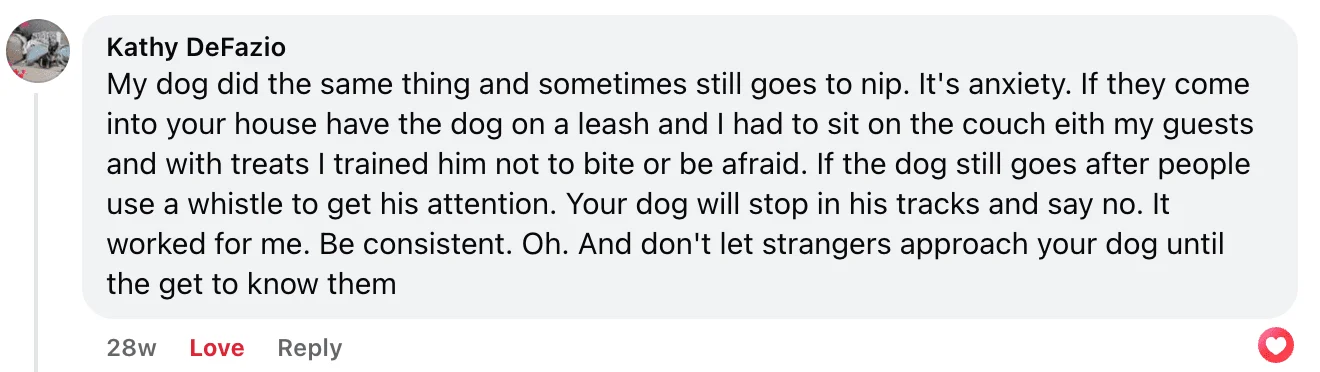
One TomKings parent, Kathy, used the same gentle principle when her anxious Frenchie nipped at guests. A leash, treats, and gradual exposure helped her little one feel safer. The lesson is the same: safety first, then small steps.
“My dog did the same thing and sometimes still goes to nip. It’s anxiety. If they come into your house have the dog on a leash and I had to sit on the couch with my guests and with treats I trained him not to bite or be afraid. If the dog still goes after people use a whistle to get his attention. Your dog will stop in his tracks and say no. It worked for me. Be consistent. Oh. And don’t let strangers approach your dog until they get to know them.”
Preventing Bad Behavior and Reinforcing Good Behavior
In our homes, we keep the rules around food, toys, and greetings clear and predictable. We notice better progress when every family member responds in the same calm way. With our puppies, we reward a glance back at us, a relaxed breath, or one step away from the trigger. These quiet moments are how calmer habits begin.
Managing Excessive Barking and Reactivity
When one of our Frenchies barks, we avoid shouting. To a sensitive baby, it may sound as though the family is joining the alarm.
Instead, we use a calm “quiet” cue, gently redirect the puppy, and reward the first moment of silence. We practise this at home first, where the baby can succeed, before trying it on a busy walk.
Practical Tools for Frenchie Parents
For our Frenchies, we choose a well-fitted front-clip harness, high-value treats, and quieter routes while rebuilding confidence. For playdates, we start with one calm, familiar companion and often begin with a parallel walk. They do not need to play immediately. Peaceful coexistence is already a wonderful beginning.
When to Seek Professional Help
When a reaction has led to a bite, is becoming stronger, or cannot be managed safely, we do not try to solve everything alone. For sudden changes, we start with a vet, then choose a certified trainer or behaviorist who uses positive reinforcement.
This is how we would choose help for one of our own Frenchies: we meet the trainer, watch how they speak to the baby, and notice how the Frenchie feels after the session. Qualifications matter, but to us, trust and chemistry matter too.
Case Examples and Client Exercises
This is the simple exercise we use and recommend on a quiet street:
- we stand far enough away that the Frenchie can still take treats
- when the baby notices another dog, we say “yes” and reward
- if the stare becomes fixed, we calmly move farther away
- we practise for five to ten minutes and finish on a good moment
When a new Frenchie joins a family, we arrange the first meeting in a neutral place. We let both babies learn each other’s scent and increase their time together only when both look relaxed.
From our experience, the first three or four days can be the hardest. Like a child adjusting to a new sibling, the older Frenchie may need extra reassurance and individual attention.
Our families often tell us the pressure lifts once they stop expecting instant friendship. We agree. The goal is not a perfect bond on day one, but enough safety for a relationship to grow.
Resources for French Bulldog Owners
Our TomKings Frenchie Facebook Family includes more than 11,000 Frenchie lovers who share real experiences and small victories. Their feedback reminds us that progress is rarely a straight line. What matters is the trust you are building.

Final Thoughts: Long-Term Strategy for Aggression in French Bulldogs
Managing French Bulldog aggression towards other dogs means understanding the cause, ruling out pain, and building safer associations through positive training.
At TomKings, we do not see a reactive Frenchie as broken, naughty, or less lovable. We see a sensitive family member who needs help communicating and feeling safe.
Progress often arrives in tiny moments: looking back at you instead of lunging, accepting a treat, or settling faster than last week. Celebrate them.
You are not simply correcting behavior. You are teaching your baby that they can trust you. That bond is the heart of everything we do with Frenchies.
FAQs
Are French Bulldogs naturally aggressive towards other dogs?
No. In our experience, aggression usually comes from fear, pain, poor socialization, or a bad experience, not from the breed itself.
What are the first signs of French Bulldog aggression?
Freezing, stiff body language, a hard stare, and low growling usually appear first.
Can aggression towards other dogs be improved?
In many cases, yes. We have seen positive reinforcement, distance, and gradual exposure help Frenchies become calmer and more confident.
Should I punish my Frenchie for growling?
No. At TomKings, we see a growl as communication. With our Frenchies, we listen to the warning, create distance, and help the baby calm down.
When should I call a vet?
When aggression appears suddenly, seems out of character, or comes with signs of pain. In these cases, a vet check is always our first step.